
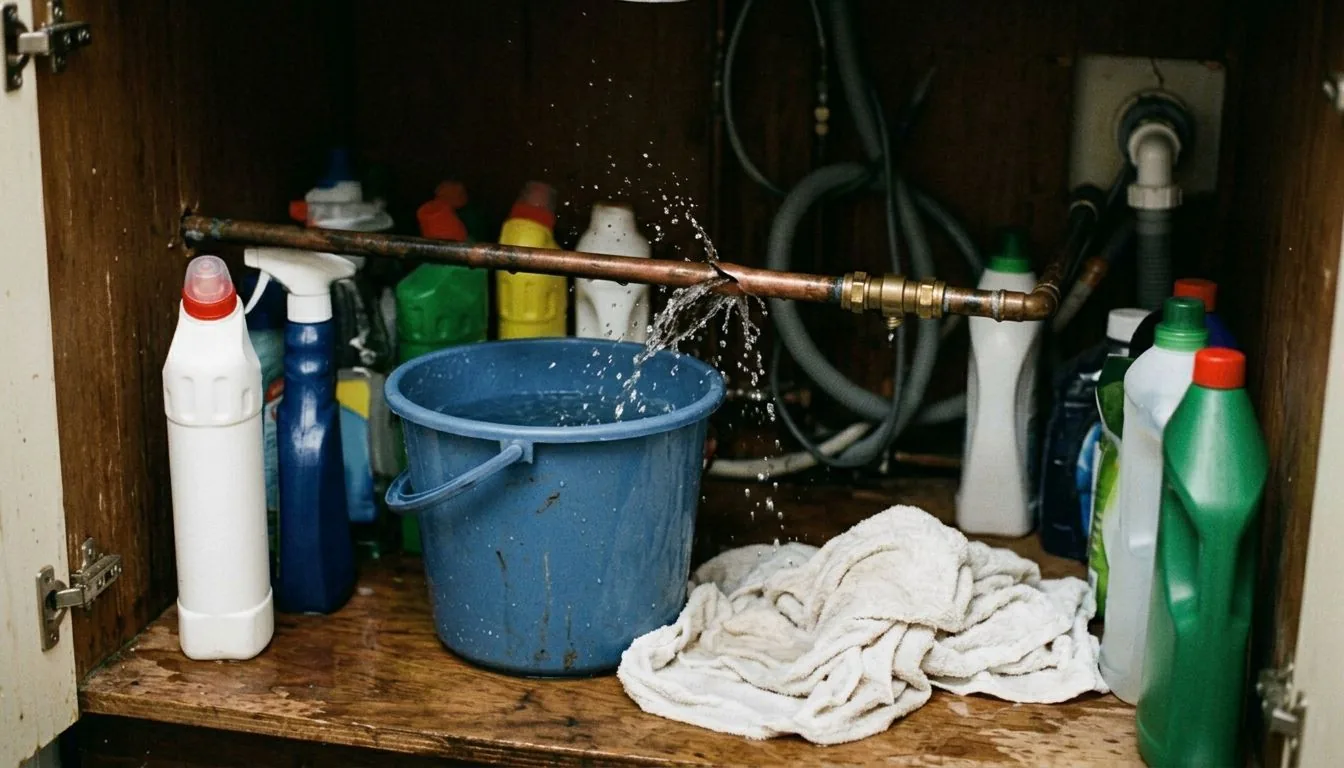
Water pouring from a pipe is one of the most stressful things that can happen at home. However, the damage it causes depends heavily on how quickly you respond.
The good news is that the right first steps are simple, since you don't need any plumbing knowledge to follow them. This guide follows the order recommended by WaterSafe, the UK's national accreditation scheme for plumbers, and by the Met Office's own advice on burst pipes.
Step 1: Turn off the water at the stopcock
The single most important thing you can do is stop the water at its source. WaterSafe's advice is to locate your internal stopcock, since this is what controls the whole supply. It's usually found under the kitchen sink, or in a cupboard, garage or cellar. Turn it clockwise to stop the flow.
The Met Office gives the same locations, although it also notes the stopcock can turn up in a downstairs bathroom or under the stairs.
If you don't already know where yours is, find it today. Do this before you ever need it in an emergency. Searching for it while water spreads across your kitchen floor wastes minutes you don't have.
Once you find it, turn the handle firmly clockwise, and it should stop, or at least dramatically slow, the flow within moments.
Step 2: Switch off your heating
With the water isolated, switch off your central heating system next, since this stops your boiler trying to circulate water through a system that's now losing pressure. It also reduces how much water keeps moving through the affected pipe.
Step 3: Open your taps to drain the system
After the stopcock is off and the heating is down, open all your hot and cold taps. This releases the water still sitting in the pipes. It also reduces pressure in the system, which limits how much more can escape from the burst. The Met Office suggests saving some of this water in a bucket. It's still clean, so you can use it for flushing the toilet or washing your hands while the supply is off.
Step 4: Check for electrics before you touch anything
This step comes with a genuine safety warning. However careful you feel, if escaping water has reached sockets, switches or any electrical appliance, do not touch them. Both WaterSafe and the Met Office are explicit on this point. Switch off the affected circuit, or the whole property, at the fuse box. Don't risk an electric shock by touching wet electrics directly. If you're at all unsure, leave the electrics alone. Treat that part of the room as off-limits until a qualified person has checked it.
Step 5: Contain the water and protect your belongings
Once the water is off and the electrics are safe, turn your attention to limiting the damage. Towels, old bedding and buckets all help soak up or catch escaping water. WaterSafe also advises moving furniture and personal items away from the affected area. Use towels or boards to stop water spreading into rooms it hasn't reached yet.
Step 6: Call a plumber
With the immediate danger under control, it's time to get the pipe properly repaired. A burst pipe that's been isolated is stable, yet it isn't fixed. Leaving it isolated indefinitely means living without water to that part of your home. The burst pipe repair service covers this kind of job across Wolverhampton and the wider West Midlands. If you need a plumber for anything urgent beyond the pipe itself, the emergency plumber service is there too.
Step 7: Photograph the damage before you clean up
Before you start drying things out properly, photograph the affected area, since damaged flooring, furniture or ceilings are easier to prove now than later. If you need to claim on your home insurance, a clear record from the moment you found the damage makes that process much easier. Keep any damaged items where practical, until your insurer confirms they don't need to see them in person.
What if you can't find the stopcock?
If you genuinely cannot locate your internal stopcock and water is escaping fast, your priority shifts. Get people and pets away from the area. Protect electrics as above. Get towels and buckets down while you call for help. A plumber attending an emergency call-out can isolate the supply for you if you're unable to do it yourself.
Why a burst pipe happens in the first place
Understanding the cause helps you judge how urgent the situation is. Cold weather is a common trigger, since water expands as it freezes and can split a pipe from the inside. Often the crack only becomes obvious once the ice thaws and water starts flowing again. Old or corroded pipework is another common cause, particularly in older properties where a section of pipe has been in place for decades. High water pressure, a knock during building work, or a poorly fitted joint can all lead to the same result: a sudden, unplanned leak that needs an immediate response.
Because the cause varies so much, so does the fix. A frozen, split section of pipe in a loft might be a quick job, once the area is accessible. A corroded joint behind a bathroom wall is a bigger undertaking, since reaching it means opening up tiling or plasterboard first. Either way, the first ten minutes matter regardless of the cause. They determine how much water escapes before anyone starts the actual repair.
What not to do
A few instincts are worth resisting in the heat of the moment. Don't reach for electrics near standing water, even to switch off a light, until you've isolated the circuit at the fuse box. Don't try to patch the pipe yourself with tape or a makeshift clamp while it's still under pressure. It rarely holds, and it can delay the one thing that actually stops the leak: isolating the water supply. And don't assume a small trickle means a small problem. A slow leak from a hairline crack can still soak into floors and walls for hours, if the stopcock isn't turned off.
Different towns, same first steps
Whether you're in Wolverhampton, Walsall, Dudley, Cannock, Bilston or Willenhall, the first ten minutes look the same, since the steps don't change with the postcode. Stopcock off, heating off, taps open, electrics checked, damage contained. What changes is how quickly a plumber can reach you, and that's why knowing your own stopcock's location in advance is worth five minutes of your time this week.
After the water is off
Once the immediate danger has passed, it's worth thinking about why the pipe burst in the first place, particularly if the weather has been cold. Our post on what to do about wider emergency drain and pipe problems covers the broader picture, including who is responsible for fixing what. However, if the underlying issue turns out to be a blocked drain rather than a supply pipe, our guide to the warning signs of a blocked drain explains how to tell the difference.
Get help now
If you're dealing with a burst pipe right now, don't wait for it to get worse, since standing water rarely improves on its own. Request a callout online and describe what's happening, and we'll get you in touch with a local engineer who can take it from here.