
Most house buyers focus on the roof, the windows and the boiler. Few ever think about the pipes running under the garden and the driveway, though a CCTV drain survey looks at exactly that. It can reveal a problem that no other survey ever checks.
What a CCTV drain survey actually is
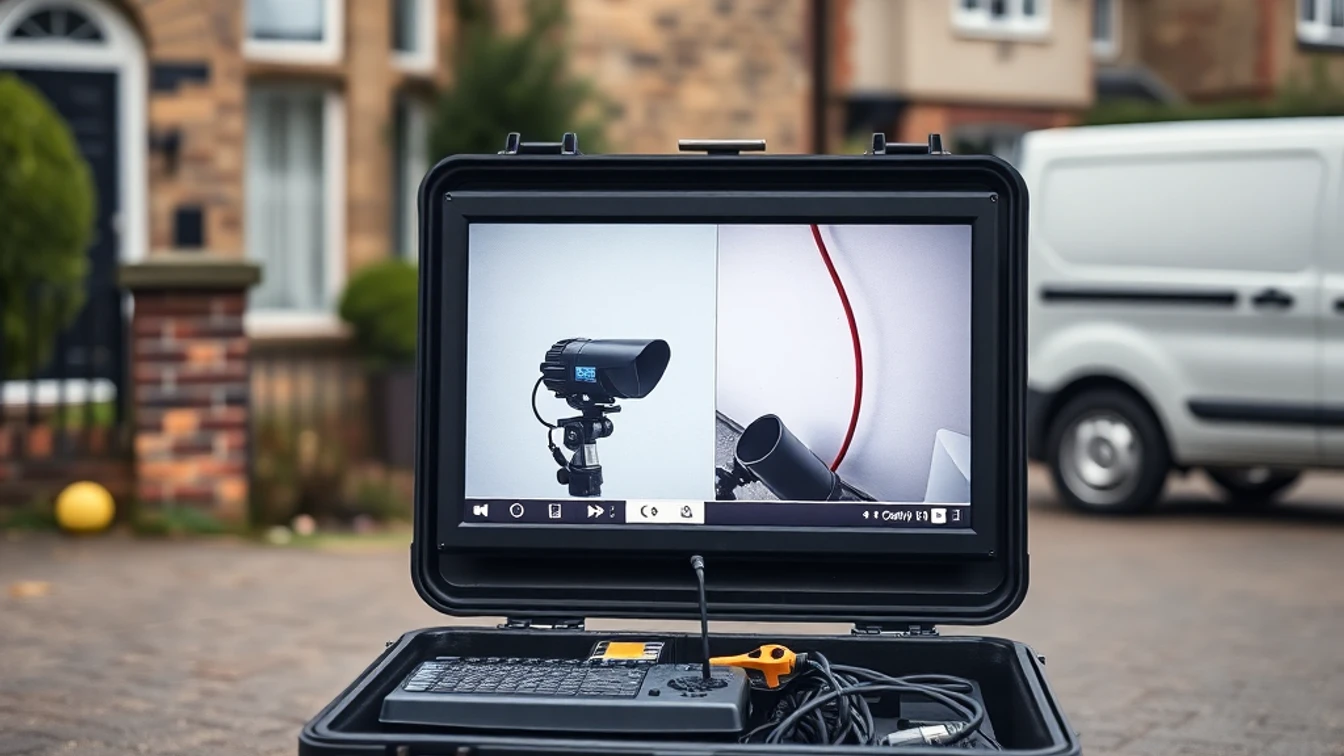
An engineer feeds a small camera into the drainage system. It goes in through an existing access point. The camera travels through the pipe and records everything it sees. This finds blockages, cracks and root damage without any digging at all.
Why a standard survey misses this
A homebuyer's survey only looks at parts of a property a surveyor can reach and see. Drains sit underground, out of view, so they fall outside that scope entirely. Unless damp or subsidence is already visible above ground, however, a drainage fault simply will not get flagged.
Why 2011 changed who owns what
Before October 2011, many shared pipes counted as private sewers. Property owners along the route shared the repair bill between them. On 1 October 2011, though, ownership of most private sewers and lateral drains in England transferred to the water and sewerage companies. That single date still shapes who pays for what today.
That transfer only covers shared sewers and lateral drains. Citizens Advice is clear that you stay responsible for the drains inside your own boundary. You also remain responsible for the cost of maintaining any private or unadopted sewer that never transferred. A survey tells you which situation you are actually buying into.
Common problems a survey uncovers
Tree root ingress
Roots grow toward moisture, and a drain pipe is exactly that. Once a root finds a crack or a loose joint, it forces its way in. It then gradually chokes the pipe from the inside. Properties with mature trees nearby carry the highest risk.
Collapsed or cracked pipes
Older properties often still have clay or pitch-fibre pipework, and both degrade with age. A camera survey shows a crack, a break or a full collapse clearly. It does this long before any of it becomes visible above ground.
Displaced joints
Ground movement and traffic vibration can force pipe joints apart over time. A displaced joint lets waste leak into the surrounding soil. Left alone for long enough, that leak can eventually cause subsidence.
Wrong connections
Some older properties have surface water pipes wrongly connected to the foul sewer, or the other way round. A survey catches this kind of fault too. It shows up clearly on camera, even though nobody can see it from the surface.
What the rules say about access
Approved Document H sets out four types of drain access point: rodding eyes, access fittings, inspection chambers and manholes. It also sets maximum spacing between them. For example, a drain needs an inspection chamber within 22 metres of its start, and a manhole within 45 metres.
A survey engineer uses exactly these access points to run the camera through the system. If a property has too few of them, or none at all, that fact alone is worth knowing before you buy.
What a CON29DW search does not tell you
The CON29DW residential search is a standard part of most house purchases. Since it standardises the questions asked, every seller answers the same 25 set questions about the property's water and sewerage assets. It confirms whether the property connects to public sewers, and flags any recorded risk of internal flooding.
It does not show the physical condition of the pipes, though. A cracked pipe with no flooding history yet can pass a CON29DW search cleanly. It can still need thousands of pounds of work within a year or two. A CCTV survey is the only way to actually see inside.
Using the results at the table
A survey that finds a problem gives you real leverage before you exchange contracts. You can ask the seller to fix the fault, or negotiate the price down to cover it yourself. You can walk away too, if the damage turns out to be severe. Either way, you decide with the facts in front of you.
What a good survey provider gives you
Look for full HD footage you can keep and review later. Ask for a written report you can share with your solicitor, too. A good report explains any issue in plain English, and, since costs vary a lot by job, gives you a clear quote for any repair work it recommends.
At Emergency Plumber In Wolverhampton, we can pass your request for a pre-purchase drain survey to a local engineer. Ask them for the footage, a written report and a quote for any repairs the survey finds. If a survey does uncover damage, drain repairs such as pipe relining or full drain excavation can be requested, whichever the pipe actually needs.
What happens on the day
An engineer starts at the nearest manhole or inspection chamber. They feed the camera in and guide it along the full run, filming as they go. A monitor shows the footage live, so you watch the same picture the engineer sees.
How long it takes depends on the length and layout of the run, and the engineer can give you an estimate before starting. Afterwards, you get the footage along with a written summary of anything found. If the pipe turns out to be clear, that peace of mind alone often justifies the cost of the survey.
What a survey typically costs
Cost guides such as MyJobQuote and Precise Drainage put a typical domestic CCTV drain survey at roughly £85 to £350, with larger properties or a full mapping report towards the higher end. Treat any figure like this as a general guide rather than a fixed price, since the true cost depends on pipe length and access.
For plumbing costs beyond a drain survey, our guide to emergency plumber costs in Wolverhampton sets out typical UK price ranges for call-outs, burst pipes and drain jobs.
Booking a survey near you
Surveys can be requested across the whole area, and older terraced streets often carry older pipework than a buyer expects. Find your own town in the list below.
- CCTV drain surveys in Wolverhampton
- CCTV drain surveys in Walsall
- CCTV drain surveys in Dudley
- CCTV drain surveys in Bilston
- CCTV drain surveys in Wednesfield
- CCTV drain surveys in Willenhall
- CCTV drain surveys in Tettenhall
- CCTV drain surveys in Codsall
- CCTV drain surveys in Cannock
For buyers checking a property just outside the combo-page towns, Bilston, Wednesfield, Willenhall and Tettenhall are also covered as hub areas in their own right.
Book your survey
Book a CCTV drain survey online before you exchange contracts, and know exactly what you are buying.